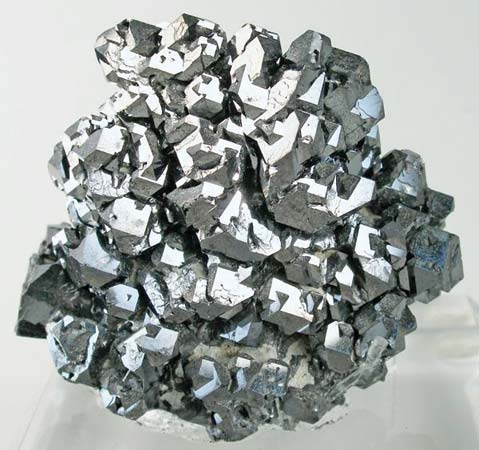
Lead

Lead

Mineral Raw Material
Mineral
0 Research Studies
2 States Found
2 Locations
Standard Priority Level
Found in:
Cross River Ebonyi

Occurrence & Locations

Detailed information about where Lead is found across Nigeria

Wanakande Gabu

Cross River State • Ogoja LGA
2019
Location Details:

Wanakande is a town in cross river state With highe amount of Lead

Specifications:

Ca(H2O)2(SO4) With purity 80% above

Estimated Reserves:

1,500 Mtr/Tones Estimated

Coordinates: 6.654800°N, 8.797700°E

Ishiagu

Ebonyi State • Ivo LGA
2019
Location Details:

Ishiagu is a town in the Ivo Local Government Area in Ebonyi State, Nigeria, located on the plains of the south-eastern savannah belt. It is the location of the Federal College of Agriculture, Ishiagu. An open-pit lead/zinc mine was opened in 1965

Specifications:

unspecified

Estimated Reserves:

unspecified

Coordinates: 5.942400°N, 7.535600°E

Overview

Lead  is a chemical element with the symbol Pb (from the Latin plumbum) and atomic number 82. It is a heavy metal that is denser than most common materials. Lead is soft and malleable, and also has a relatively low melting point. When freshly cut, lead is silvery with a hint of blue; it tarnishes to a dull gray color when exposed to air. Lead has the highest atomic number of any stable element and three of its isotopes are endpoints of major nuclear decay chains of heavier elements.

Lead is a relatively unreactive post-transition metal. Its weak metallic character is illustrated by its amphoteric nature; lead and lead oxides react with acids and bases, and it tends to form covalent bonds. Compounds of lead are usually found in the +2 oxidation state rather than the +4 state common with lighter members of the carbon group. Exceptions are mostly limited to organolead compounds. Like the lighter members of the group, lead tends to bond with itself; it can form chains and polyhedral structures.

Lead is easily extracted from its ores; prehistoric people in Western Asia knew of it. Galena, a principal ore of lead, often bears silver, interest in which helped initiate widespread extraction and use of lead in ancient Rome. Lead production declined after the fall of Rome and did not reach comparable levels until the Industrial Revolution. In 2014, the annual global production of lead was about ten million tonnes, over half of which was from recycling. Lead's high density, low melting point, ductility and relative inertness to oxidation make it useful. These properties, combined with its relative abundance and low cost, resulted in its extensive use in construction, plumbing, batteries, bullets and shot, weights, solders, pewters, fusible alloys, white paints, leaded gasoline, and radiation shielding.

In the late 19th century, lead's toxicity was recognized, and its use has since been phased out of many applications. However, many countries still allow the sale of products that expose humans to lead, including some types of paints and bullets. Lead is a neurotoxin that accumulates in soft tissues and bones; it damages the nervous system and interferes with the function of biological enzymes, causing neurological disorders, such as brain damage and behavioral problems.

Uses & Applications

Lead is still widely used for car batteries, pigments, ammunition, cable sheathing, weights for lifting, weight belts for diving, lead crystal glass, radiation protection and in some solders. It is often used to store corrosive liquids.

Related Materials

Other Mineral raw materials you might be interested in