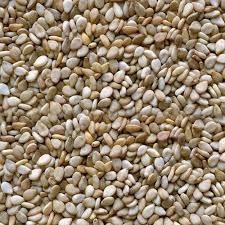
Sesame (Beniseed)

Sesame (Beniseed)

Agro Raw Material
Agro Strategic Material
0 Research Studies
2 States Found
2 Locations
High Priority Level
Found in:
Benue Gombe

Occurrence & Locations

Detailed information about where Sesame (Beniseed) is found across Nigeria

Otukpo

Benue State • Oturkpo LGA
2019
Location Details:

Otukpo is a town in Benue State, Nigeria located in the Middle Belt Region of Nigeria. It is also the eponymous name of a subgroup of the Idoma people.

Specifications:

UnSpecified

Estimated Reserves:

Unspecified

Coordinates: 7.198200°N, 8.139300°E

Shongom

Gombe State • Shomgom LGA
2019
Location Details:

Shongom is a Local Government Area of Gombe State, Nigeria. Its headquarters are in the town of Boh in the north of the area.

Specifications:

Unspecified

Estimated Reserves:

Unspecified

Coordinates: 9.669800°N, 11.297700°E

Overview

Sesame (Sesamum indicum) belongs to the plant family Pedaliaceae. Commonly called beniseed in Nigeria, it is an important oilseed crop believed to have originated from tropical Africa, where there is the greatest genetic diversity. Beniseed oil is also called “teel oil” or “benne oil” and is a pale yellow, oil liquid, and almost odourless with a bland taste. The oil consists of glycerides with about 43% oleic and linoleic 9% palmitic, and 4% stearic fatty acid In Nigeria, beniseed in Nigeria is mainly cultivated betweenlatitudes 6o and 10oN covering the derived southern and northern Guinea savanna, Sudan savanna and Sahel vegetation zones. The major producing states are Adamawa, Benue, Borno, Gombe, Kogi, Jigawa, Kano, Nasarawa, Katsina, Kaduna, Plateau, Yobe, Zamfara, Taraba, Kebbi, Sokoto, Cross Rivers and the Federal Capital Territory, Abuja

Beniseed varieties can be categorized by their seed colour, maturity time, and useage or source.

  • black-seeded or white (cream) seeded varieties;
  • Early, medium or late maturing varieties;
  • crushing (Kano type)or baking/confectionery (Benue -type)
  • improved(Agric) varieties, mainly the creamy-white coloured improved varieties.

Uses & Applications

  • production of margarine, canned sardine and canned beef, as well as in the soap and confectionery industries.
  • After burning, sesame oil yields top quality black ink, also used for nutraceutical and pharmaceutical uses.
  • Antifungal Chlorosesamone
  • Bactericide, insecticide Sesame, Sesamolin
  • Antioxidant, hepatoprotective Lecithin
  • Drug vehicle and laxative

Hypoglycaemic activity Flavonoids

Processing

Storage: The seed containing the oil must be properly stored and prepared for extraction, to maintain high quality final product. After the seed is removed from storage, the following steps are followed in oil extraction: - cleaning, dehulling, drying and oil extraction.


Cleaning: This could be either dry or wet cleaning. The seeds are cleaned so that oil is not contaminated with foreign materials. Stones, sand dirt and spoilt seeds are removed. Dry

screening is often used to remove all materials that are over or undersized. After cleaning, the seeds are conditioned and steamed in order to ease the problem of dehulling to remove the bitter taste associated with it.

Dehulling: After cleaning, it is necessary to remove the outer seed coat. There is a couple of reasons for doing this. The seed coat does not contain oil, so including it makes extraction less efficient. In dehulling, the ratio of seed to water is 1:6 (i.e. 1 part by weight of seed to 6 parts by volume of water). The separation of hull from the seed is achieved by using brine floatation techniques. This involves pouring the mixture after dehulling and dewatering into 15% salt solution (6litres of 15% salt solution per kilogramme of raw seed) in a plastic container. This achieves a yield of about 90%. It is worthy to note that FIIRO had improved on the methods of dehulling by the development of a mechanical

dehuller that can handle a batch of up to 10kg of beniseed per 10 minutes. The machine consists of a shaft carrying three blades. The high speed rotating blades in excess water will bring about the dehulling of the seeds without breakage.

Drying: The wet seeds (meat) resulting from the dehulling process are roasted in an open pan to a temperature of about 95oC till the wet weight is reduced to 25%. The seeds are milled using a hammer mill to an oily mash for oil extraction.

Oil Extraction: Mechanical pressing using hydraulic press results in considerable quantity of residual oil (about 34 – 35%). A screw press is further used to reduce the quantity of oil left in the press cake to about 5 – 6%. The oil obtained is filtered using a filter press and the resulting golden yellow oil is clear and of very appealing aroma. The oil is packaged while the meat is used for biscuits.


Market Information

Beniseed has high economic potentials in Nigeria both as source of raw material, for the vegetable oil industry and as a veritable foreign exchange earner.

Beniseed processing and utilization in Nigeria is carried out at small-scale level. Total annual consumption of beniseed globally is about 65% for oil extraction and 35% for food. Japan leads the world in beniseed imports, followed by Europe and the US where more than 70% of beniseed is processed into oil and meal. Therefore, there are opportunities for investment in beniseed in Nigeria for export to Europe and other continents.

Sesame Seed Oil Production in Nigeria

S/N

Year

Quantity (MT)

1.

2006

4400

2.

2007

3600

3.

2008

3200

4.

2009

2400

5.

2010

2400

6.

2011

2400

7.

2012

2400

8.

2013

2400

9.

2014

2400


Source: FAO STAT

Investment Opportunities

The demand and use of the crop can be traced to the ancientBabylonian empire where it was a highly prized oil crop; the Chinese burned sesame oil for their writing materials; Japan

uses beniseed as a health food and leads the world in beniseed imports followed by Europe and the US where more than 70% of beniseed is processed into oil and meal. Beniseed is traded throughout Asia, Europe, Africa and the United States

 Beniseed is cultivated on over 80,000ha across most of the northern states of Nigeria,  for food and oil. Benue and Nasarawa states are the highest beniseed producers in Nigeria with annual outputs of not less than an average of 40,000 MT each per annum.

Beniseed marketing is unstable in Nigeria, so are their prices.Prices vary with locations and varieties. The activities of the middlemen have further aggravated this situation since there is no commodity board for beniseed. The prices of beniseed can vary even, within a state. For example, in Benue State, the local price varied from N40,000/MT to 140,000/MT, depending on the variety. The prices are generally lower during the on-season, when there is abundant supply than

off-season, when supply is scarce


Nigeria has abundant land and labour for beniseed production.On the  average, 500kg of beniseed is harvested per hectare. As a raw export commodity, beniseed seed from Nigeria is enjoying a rising profile on the world market where overall global demand has risen to 3.3 million tons. Beniseed like other raw agricultural commodities has over 15% margin in terms of valueadded products compared to other crops. For instance, in year 2000, while a tonne of beniseed raw seed was selling for about

$720 (N72, 000) the processed oil of the same quality was selling for $3,500 (N350, 000).


Related Materials

Other Agro raw materials you might be interested in